How Speedrunning Formed a Competitive Subculture
5 December 2025
So, you’ve heard of speedrunning, huh? That magic (and slightly chaotic) corner of the internet where people race through video games like they’ve got Mario’s warp pipe directly installed in their veins. If you’ve ever wondered what kind of person sees a 40-hour RPG and thinks, “I can do this in 7 minutes,” well… welcome to the zany world of speedrunning.
But here’s the kicker: speedrunning is no longer just a quirky hobby for pixel-obsessed gamers. It’s blossomed into a full-blown competitive subculture, complete with rivalries, world records, frame-perfect jumps, and a whole lotta glitches. So buckle up, buttercup—let’s take this ride through the high-octane universe of speedrunning and how it evolved from button-mashing fun to fierce competition.
Wait, What Even Is Speedrunning?
Speedrunning is the art (yes, art) of finishing a video game as fast as humanly—or sometimes superhumanly—possible. Think of it like parkour for gamers. The goal? Beat the game in record time, often using clever tricks, exploits, and sometimes bending the rules of physics.And no, we’re not just talking about zooming through Sonic the Hedgehog, although that would make sense. Speedrunners tackle everything—from the original Super Mario Bros. to ridiculously punishing games like Dark Souls, and even quirky indie games or broken messes like Big Rigs: Over the Road Racing. (Trust me, you haven’t lived 'til you’ve seen someone speedrun a game that was barely finished.)
The Origins: A Race Against Time (And Sanity)
Speedrunning didn’t just pop out of a warp pipe one day. In the early 90s, gamers started timing themselves playing through popular games like Doom and Quake. These early timers were the pioneers—armed with VCRs, stopwatches, and a deeply concerning amount of patience.Communities like Speed Demos Archive (SDA) were among the first to catalog runs and set rules for what counted as a “legit” speedrun. You had to follow the rules, submit your recording, and—this is important—not cheat. (We see you, Game Genies.)
But it wasn’t until platforms like YouTube, Twitch, and Reddit hit the scene that the speedrunning community went from a niche group of enthusiastic basement gamers (no judgment) to a global, competitive phenomenon.
Categories, Glitches, and Pure Chaos
Let’s clear something up. Speedrunning isn’t just about mashing buttons faster than a caffeinated squirrel. There is a system (sorta). Different categories define how a run is judged:- Any% – Beat the game as fast as possible by any means necessary. Glitches? Bring 'em. Skip the final boss? Absolutely.
- 100% – Finish everything. Collect every coin, heart, sock, or oddly specific artifact the game throws at you.
- Low% – Complete the game using the least amount of items or upgrades.
- Glitchless – For the purists. No shortcuts, no funny business. Clean hands only.
One minute you’re watching someone beat The Legend of Zelda: Ocarina of Time by following the story; next moment, they’re backflipping into a wall and ending up in the end credits screen within 23 minutes. It's like watching someone cook a five-course meal in a microwave.
Speedrunning’s Secret Sauce: Community
Sure, the racers are impressive—but what really solidified speedrunning into a full-blown subculture? The community.This isn’t just a bunch of sweaty gamers trying to shave 0.03 seconds off a time. These folks hold forums, create leaderboards, develop practice tools, and—even wilder—give each other advice on how to beat their own world records. It’s like if Olympic runners taught each other how to run faster just so the next race stays spicy.
Speedrunners gather on platforms like Twitch, Discord, and Speedrun.com to share tricks, post PBs (personal bests), and collectively mourn when a near-perfect run gets bodied by RNG (random number generator) or a missed input. Painful stuff.
The Competitive Side: Glory, Sweat, and Salt
As with any sport—yes, we’re calling it a sport—where there are scores and timers, there’s competition. And where there's competition, there’s drama. Oh yes, there’s salt. Oceans full of it.People train for months, maybe even years, to dominate a leaderboard. Frame-perfect inputs, exploiting pixel-perfect glitches, and fighting against your own muscle memory becomes a daily grind. And when someone swoops in and shatters your record, it's like someone karate-chopped your childhood teddy bear.
Some rivalries are legendary. New runners challenge the titans, records fall unexpectedly, and sometimes… cheaters get exposed. Remember when that guy “beat” Minecraft but forgot to hide the mod folder? Yeah, the internet doesn’t forget.
Charity Events: Speedrunning For a Cause (and Fun)
Enter the wholesome side of speedrunning: Games Done Quick (GDQ). This semiannual charity event brings together the best runners to showcase mind-blowing skills while raising millions for causes like cancer research and disaster relief. Yes, millions.Watching someone blast through Super Metroid in under an hour while cracking jokes and reading donations is weirdly comforting. It feels like a mix of sports coverage, comedy show, and technical masterclass. All for a good cause. What’s not to love?
Inside Jokes, Memes, and Culture
Every tight-knit community has its inside jokes—and speedrunning is no different.- “This run is dead” – Usually said after one tiny mistake… even if the run is still world-record pace.
- “Frame-perfect” – A phrase used so often it might as well be in the speedrunner’s national anthem.
- “RNGesus” – The mythical god of luck that either blesses or totally ruins your run.
- “Reset hell” – When a runner restarts their game so many times they forget what daylight looks like.
Speedrunners also form clans, participate in relay races, and even coin their own memes. Ever heard of "Zips" or "Wrong Warps"? No? You’re in for a wild ride.
The Tech Behind the Madness
Speedrunning ain’t just button mashing. It’s a science. We’re talking data analysis, frame counting, emulator tools, memory manipulation—basically everything short of building a time machine (and someone is probably working on that).Some runners even dive deep into the game’s code to understand how to break it more efficiently. It’s like Game Shark meets NASA.
People literally spend hundreds of hours perfecting a 5-minute run, just to save a fraction of a second. The dedication is real. And slightly terrifying.
Why People Are Obsessed With It
So, what’s the big appeal? Why obsess over beating a game faster than your lunch break?- Achievement – It feels awesome to beat a tough game in record time.
- Creativity – Finding new glitches or skips is like solving complex puzzles.
- Community – There’s always someone cheering you on (and reminding you you’re insane).
- Status – Climbing the leaderboards gives you bragging rights and cool nerd clout.
- Challenge – It's not just about fun; it's about pushing yourself to your absolute limits.
Also, let’s be honest—there’s something wildly fun about turning a 50-hour epic into a mad dash with a rubber band and sheer willpower.
The Future of Speedrunning
Speedrunning is evolving faster than you can say “Any% No Major Glitches.” With AI tools, better capture equipment, and a growing audience, the community is only going to get stronger.It’s already sneaking into mainstream gaming culture. Developers are starting to add speedrun-friendly features, like timers or level warps. There are even game modes designed specifically for speedrunners.
Who knows? Maybe one day we’ll watch speedrunning at the Olympics. (Okay, maybe not soon. But we can dream.)
Final Thoughts: A Love Letter to the Fast and the Frustrated
Speedrunning is more than just a gimmick. It's a celebration of skill, determination, creativity, and, let’s face it, a bonkers level of dedication that most of us can only admire from afar.It’s a world where milliseconds matter, glitches are gospel, and the grind never truly ends. So next time you’re struggling to beat a game on easy mode, just remember: there’s probably someone out there who beat the same game… blindfolded… with one hand… while playing piano with the other.
And honestly? We love them for it.
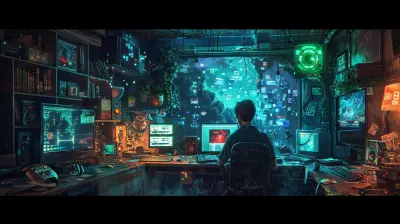
all images in this post were generated using AI tools
Category:
Gaming CommunitiesAuthor:

Luke Baker
Discussion
rate this article
2 comments
Axel Wolfe
Great article! It's fascinating to see how speedrunning has evolved into such a vibrant community. The dedication and creativity of players really shine through!
December 8, 2025 at 4:54 AM
Luke Baker
Thank you! I'm glad you enjoyed it. The passion and creativity of the speedrunning community truly make it special.
Asher Brooks
Great article! It's fascinating to see how speedrunning has evolved into a vibrant competitive subculture, fostering community, creativity, and innovation in gaming. Excited to see where it goes next!
December 6, 2025 at 5:53 AM
Luke Baker
Thank you! I'm glad you enjoyed the article and share the excitement for the future of speedrunning!