Game Characters With the Most Emotional Depth
2 February 2026
When we think about video games, epic boss fights, jaw-dropping graphics, and intense multiplayer battles often steal the spotlight. But there’s another layer that often gets overlooked — the emotional journey. The moments that make us pause, think, and sometimes even cry. Some characters leave a permanent mark not because they wield the biggest sword or cast the coolest spells, but because they feel real. They struggle, they grow, and they mirror our own emotional highs and lows.
So, let’s peel back the layers and talk about the game characters with the most emotional depth — the ones who made us feel all the feels.
What Makes a Game Character Emotionally Deep?
Let’s start with the basics. Emotional depth isn’t about a sad backstory slapped onto a generic action hero. It’s about complexity — internal conflict, growth, vulnerability, and a believable arc. Think of it like an onion: more layers, more tears.It’s the difference between a cardboard cutout and someone who feels human, even if they’re a space soldier, a witch, or a talking raccoon. These characters evolve, they make mistakes, they love, they lose, and they process it all in ways that feel authentic.
1. Joel Miller (The Last of Us Series)
Let’s just rip the band-aid off and start with Joel. If you've played even a few hours of The Last of Us, you know this man is the embodiment of complex emotions.Joel begins as a broken father who’s lost everything. He builds emotional walls sky-high after the death of his daughter, Sarah, during the early days of the Cordyceps outbreak. Fast-forward twenty years, and he’s tasked with protecting Ellie, a teenage girl who might be humanity’s only hope.
But here’s the twist: Joel doesn’t want to feel again. And yet, as the game progresses, he does. He starts seeing Ellie not just as a mission, but as family. His decisions are morally gray, sometimes devastating, always deeply human.
His emotional evolution is gripping. He goes from being emotionally detached to making a world-altering decision based purely on love. You might disagree with his choices — and that’s the point — but you can’t deny how real he feels.
2. Arthur Morgan (Red Dead Redemption 2)
Arthur Morgan is the poster child for emotional storytelling in a game. What makes Arthur’s arc stand out is the subtlety of his transformation. He starts as a loyal enforcer for Dutch’s gang — rough around the edges, a bit of a brute, and seemingly hollow.But as the story unfolds, especially after he’s diagnosed with tuberculosis, we see a man confronting his own mortality. He starts questioning the life he’s led, the choices he’s made, and what kind of legacy he’ll leave behind.
Through journal entries, quiet reflections, and his changing relationships, Arthur's emotional intelligence begins to blossom. He becomes philosophical, protective, and even gentle. His character arc is a masterclass in redemption and self-awareness.
By the time the credits roll? You feel like you’ve actually known him.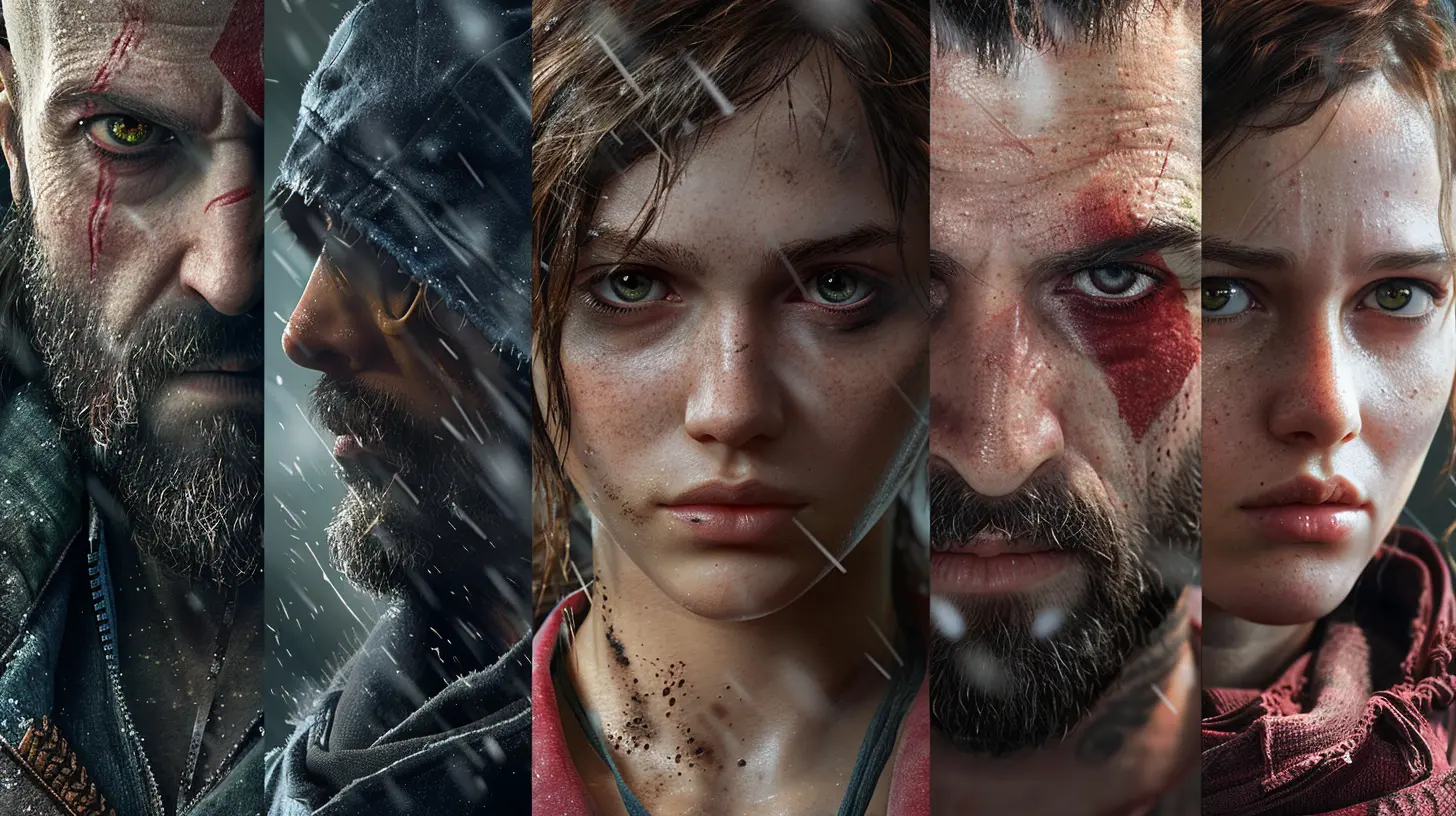
3. Max Caulfield (Life is Strange)
Max isn’t your typical hero. She’s a shy photography student who suddenly discovers she can rewind time. Sounds cool, right? But this isn’t a power fantasy—it’s emotional chaos.What makes Max so relatable is her uncertainty. She messes up. She second-guesses herself. And the decisions you, as the player, make with her carry emotional weight. Guilt, fear, hope, and love are all jumbled together.
Max's relationship with Chloe, her childhood best friend, is the emotional backbone of the game. It’s messy, real, and filled with moments that hit like a freight train. Whether you're comforting her after loss or deciding her fate — the emotional stakes are sky-high.
4. Kratos (God of War, 2018)
Yes, the same guy who used to rip monsters in half without blinking is now one of the most emotionally nuanced characters in gaming. God of War (2018) rebooted the series by giving Kratos a beard, an axe, and — surprise — feelings.This time, he’s not just a vengeance-fueled warrior; he’s also a father trying (and often failing) to connect with his son, Atreus. The emotional tension is thick. He wants to teach his son strength but struggles with being emotionally available.
Watching Kratos try to open up, even just a little, is surprisingly touching. He's a man haunted by the past, trying to break the cycle of violence and be something better. It’s like watching a stone statue slowly crack, revealing a human heart underneath.
5. Clementine (The Walking Dead Series)
Clementine grows up right in front of us. From a scared little girl in Season 1 to a hardened yet hopeful survivor in the final season, her character development is something special.Her emotional depth lies in how she adapts. She learns to survive, to lead, and to care for others — all while navigating a world that’s constantly falling apart. She faces moral dilemmas that would break most adults, yet she persists with resilience and grace.
The player’s choices help shape her personality, which adds another layer of emotional investment. She's not just a character — she becomes your Clementine.
And let's not forget that final father-daughter ride with Lee. If you didn’t cry... are you even human?
6. Aloy (Horizon Zero Dawn / Forbidden West)
Aloy's story isn’t just about fighting robot dinosaurs — though, let’s be honest, that's pretty awesome. It’s about identity, abandonment, and carving your own path in a world that wasn’t made for you.Raised as an outcast in a tribal society and clueless about her origins, Aloy grows up with questions no one wants to answer. When she finally learns the truth — that she’s a clone of a long-dead scientist meant to save the world — it rocks her foundation.
She wrestles with the weight of expectation versus her own desires. She chooses empathy over detachment, despite being emotionally isolated for most of her life. Her emotional depth isn't loud or dramatic; it's the quiet strength of someone choosing hope in a world that's lost its way.
7. Geralt of Rivia (The Witcher Series)
Geralt might appear emotionally stoic at first glance — I mean, he literally takes potions to dull emotions for monster hunting. But scratch the surface, and there’s a world of complexity.He’s a man torn between fate and free will, between duty and desire. His relationship with Ciri, his adopted daughter, is at the core of his emotional journey. He’s protective yet conflicted, capable of tenderness and sarcasm alike.
The beauty of Geralt’s character is that he reflects the choices you make. Will he be ruthless or merciful? Loyal or self-serving? His emotional depth often reveals itself in moments of quiet — a conversation at a campfire, a reluctant goodbye, a knowing glance.
He’s a living paradox: emotionless by design, emotionally rich by experience.
8. Senua (Hellblade: Senua’s Sacrifice)
Senua might be the most emotionally raw character on this list. Her journey isn’t just physical — it’s psychological, spiritual, and deeply personal.Suffering from psychosis and grief, Senua ventures into the Norse underworld to save the soul of her deceased lover. The game pulls no punches in portraying her inner demons, literally and metaphorically.
What's groundbreaking is how the game puts you inside her mind. The whispers, hallucinations, and isolation make you feel her pain firsthand. She’s not "crazy" — she’s navigating a mental illness with unimaginable strength. By the end, her courage is not in slaying enemies, but in confronting her own trauma.
Senua’s emotional depth is gut-wrenching because it’s real. Raw. Unfiltered. And unforgettable.
9. Lee Everett (The Walking Dead: Season One)
You didn’t think we’d talk about Clementine without mentioning Lee, did you?Lee’s story is heartbreaking because it’s about redemption. A man with a dark past who finds purpose in protecting a child. The bond between Lee and Clementine is the emotional core of the entire first season.
He teaches her how to survive, how to trust, and maybe most importantly — how to say goodbye. His emotional journey isn’t just about personal growth; it’s about passing the torch to the next generation. And that final scene? Goosebumps. Every single time.
10. Ellie (The Last of Us Part II)
We started with Joel, and it's only fair we close with Ellie.In The Last of Us Part II, Ellie is no longer the wide-eyed teenager we met before. She’s older, angrier, emotionally wrecked — and on a path of revenge that eats away at her soul.
The brilliance of her emotional depth lies in the narrative's refusal to romanticize vengeance. It shows the cost, the impact, the spiraling effect of holding on to grief and rage. Ellie makes choices you don’t want her to make, and yet you understand why she makes them.
She’s torn between love and hate, between memories and trauma. Her story is messy, uncomfortable, and deeply human.
And in the end, when she plays the guitar with missing fingers, we’re reminded that even in loss, there’s still a whisper of the person she used to be.
Why Emotional Depth in Games Matters
Here’s the thing — emotional depth doesn’t just make for good storytelling; it makes for unforgettable experiences. It turns a simple 10-hour game into something that lingers for years. The characters become more than pixels; they become companions, reflections, even therapists.When a game makes you cry, laugh nervously, or just sit in silence while the credits roll... that's not just entertainment. That’s art.
And it’s these emotionally rich characters who make it possible.
Final Thoughts
These characters prove that games are more than just escapism. They are a mirror to our own humanity. Whether it’s through love, loss, redemption, or inner conflict, emotionally deep characters make us feel something real.So next time you're powering up your console or PC, keep an eye out. That silent, grizzled warrior or shy teenage girl might just drag you down into an emotional wormhole you didn’t see coming.
And honestly? That’s the magic of gaming.
all images in this post were generated using AI tools
Category:
Best Game CharactersAuthor:

Luke Baker
Discussion
rate this article
2 comments
Hannah McLaurin
Game characters with emotional depth often outshine their plots. It's fascinating how pixels and polygons can evoke real feelings, making us laugh, cry, and sometimes even question our own lives. Here’s to the ones that remind us gaming is not just fun, but profoundly human.
February 5, 2026 at 4:31 AM
Luke Baker
Absolutely! It's incredible how well-crafted characters can elevate a game's emotional impact, reminding us of our shared humanity beyond just entertainment.
Heather Wallace
This article beautifully highlights how nuanced storytelling elevates game characters beyond mere pixels, allowing players to forge deep emotional connections and experience profound narratives. Well done!
February 2, 2026 at 3:49 AM
Luke Baker
Thank you! I’m glad you resonated with the piece and appreciate the importance of nuanced storytelling in games.