Characters Who Aged with Their Players
20 August 2026
There’s something magical about growing up alongside your favorite video game characters. You know what I mean, right? That moment when you revisit a game years later, and it hits you—holy crap, this character has changed… just like me.
Gaming isn’t just about escaping reality anymore. It’s about connection, nostalgia, and experiencing life—sometimes right alongside the characters we’ve loved since childhood. In this article, we’re diving deep into the world of characters who aged with their players. These aren’t just virtual heroes; they’re emotional bookmarks, growing older as we do, reminding us of who we were and who we are now.
So, ready to feel some feels? Let’s go.
Why Character Aging Matters in Gaming
Let’s be real. Most video game characters are stuck in a time loop. Mario will forever be that energetic plumber, and Link will always be silent and youthful—no matter how many Ganon bosses he defeats. But occasionally, we get a rare gem: a character who evolves, matures, and yes—ages.Why is that important? Because it makes everything feel more… real. When characters evolve, their stories reflect our own lives. Their struggles get deeper, their worldviews change, and we see a mirror of our own growth. It’s like comparing Saturday morning cartoons with Oscar-winning dramas. Both are fun, but one pulls at your soul a bit more.
Solid Snake – The Veteran We Grew Up With
If there's one character who literally aged before our very eyes, it’s Solid Snake from the Metal Gear series. Introduced back in 1987, Snake started off as a stealthy soldier, knee-deep in espionage. But as the games evolved, so did he.By the time we hit Metal Gear Solid 4: Guns of the Patriots, Snake wasn’t just older—he was worn out. His hair was grey, his body was breaking down, and life had taken its toll. He wasn’t the invincible action hero anymore. He was mortal. Vulnerable. Fully human.
And for a lot of us who played that game as teens or young adults, then returned to it years later? Watching Snake age hit hard. It was like watching your favorite uncle retire, knowing he can’t run up the stairs with you anymore. Bittersweet, but honest.
Clementine – From Innocent Child to Survivor
Telltale’s The Walking Dead series gave us one of the most emotional character arcs in modern gaming: Clementine. We first met her as a scared little girl hiding in a treehouse during the zombie apocalypse. Remember that? She was quiet, sweet, and totally dependent on Lee, her protector.Fast forward through the seasons, and Clem grew up before our very eyes. We made choices for her. We guided her. But eventually? She made her own choices. She learned to lead, to protect others, to survive in a brutal world.
Watching Clementine become her own person was like watching your own little sister go off to college. You’re proud… but also a little heartbroken. That innocence? It’s gone. But what replaced it is strength.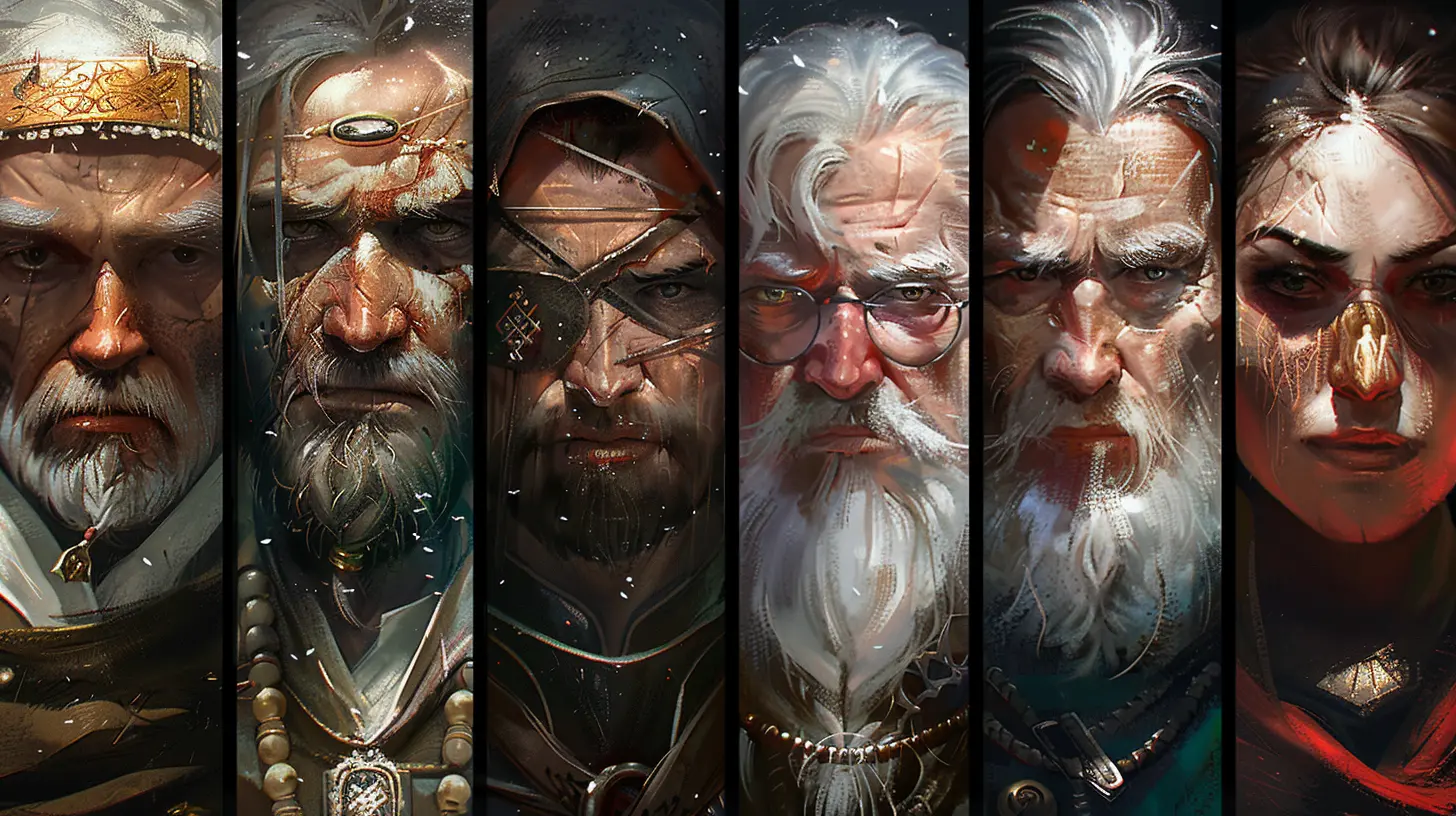
Kratos – From Rage Monster to Regretful Father
Back in the 2000s, Kratos from God of War was the epitome of gamer rage. He was loud, angry, and destroyed everything in his path. Honestly, it was kind of cathartic. But come God of War (2018)? Whoa. Total transformation.Kratos is older now. Wiser. And guess what? He’s a dad. The game shifted tone completely—from hack-and-slash fury to quiet, emotional storytelling. And Kratos? He struggled with fatherhood. He didn’t know how to connect with his son, Atreus, and that vulnerability made him relatable.
For those of us who played the original games as teenagers, then tackled God of War 2018 as adults or parents… it was surreal. Kratos’ journey wasn’t just about gods anymore—it was about guilt, redemption, and navigating relationships. Just like us.
Commander Shepard – Our Choices, Our Legacy
Okay, we’re stretching the “aging” part here a bit. Commander Shepard from Mass Effect doesn’t visibly age too much. But hear me out—emotionally, Mass Effect evolves with its players.From Mass Effect 1 to Mass Effect 3, Shepard changes based on the decisions we make. That’s the kicker. It’s not just about what happens to Shepard—it’s about how we shape them. And the longer we play, the more we’re forced to face the consequences of our actions.
It's like looking back at old diary entries. The choices you made in high school? You probably wouldn’t make them now. And that’s what Mass Effect captures so brilliantly. Shepard carries your history—mistakes and all. By the end, it’s not just their legacy, it’s yours too.
Ellie – Innocence Lost and Found Again
If you played The Last of Us when it first launched, you probably remember Ellie as a scrappy, foul-mouthed teenage girl who refused to be a victim. Her bond with Joel was one of the most touching relationships gaming had ever seen.Then came The Last of Us Part II. Ellie is all grown up. And the world hasn’t been kind.
She’s angry, traumatized, and bent on revenge. It’s not the Ellie we once knew—but that makes sense. Life changes people. Especially in a world where survival means doing terrible things.
Ellie’s growth is painful to watch. But it’s also honest. She’s not perfect. She’s not supposed to be. Seeing her journey is like watching an old friend make hard choices—and knowing they’ll never be the same again.
Ezio Auditore – A Full Life, Start to Finish
Very few characters in gaming get the treatment Ezio Auditore received in the Assassin’s Creed series. We met him as a reckless, flirty teen in AC II, wanting revenge for his family's death. We followed him through Brotherhood and Revelations, watching him grow wiser, more political, and more purposeful.By the time Revelations rolled around, Ezio wasn’t that cocky Italian anymore. He was a mentor. A philosopher. A man who wanted peace more than vengeance. And when he finally laid down his weapons? It felt like a close friend walking off into the sunset.
Seriously, how often do we see a full character arc in games, from birth to old age? Ezio’s story was complete, and that’s what made it so powerful.
Lee Everett – The Father Figure We Never Knew We Needed
We touched on Clementine earlier, but let’s take a moment to talk about Lee Everett—the man who taught us how to care in The Walking Dead: Season One.Lee doesn’t age throughout the game, but our perception of him does. When we first meet him, he’s a convict in handcuffs. By the end? He’s the most fatherly, moral, loving protector you could imagine.
As players, we matured with Lee. We learned responsibility, empathy, and how to prioritize someone else’s well-being over our own. And when he said goodbye to Clementine? Well… there wasn’t a dry eye in the room.
Lee aged, not in years, but in soul. And he took us on that journey, one heartbreaking choice at a time.
Arthur Morgan – The Wild West’s Tragic Hero
Let’s talk Red Dead Redemption 2. Oh man. Arthur Morgan.At first, he seems like your typical outlaw—tough, sarcastic, loyal to the gang. But as the story unfolds, so does Arthur. And by the end? He becomes something more. Something deeper.
What makes Arthur’s growth hit so hard is how slowly it creeps in. He starts questioning things. He shows compassion. He starts caring about what kind of legacy he’s leaving behind.
And when he receives that fatal diagnosis? Everything changes. Arthur doesn’t just age in body—he matures in spirit. He wants to be better. And in doing so, he becomes one of the most beloved characters Rockstar has ever created.
How These Characters Reflect Our Own Growth
Think about this: when you first played these games, who were you? What was going on in your life?Now think about who you are today.
These characters aren’t just aging—they’re reflecting. They mirror our own experiences. They show us the weight of time, the value of change, and the beauty in imperfection. Watching them grow up, make mistakes, and redeem themselves reminds us that we’re all on our own journey—and it’s okay not to have it all figured out.
Sometimes, a character’s story helps us better understand our own.
Final Thoughts: Growing Old Together
Video games have evolved—from button-mashing fun to deeply personal storytelling experiences. And characters who age with us? They’re the heart of that evolution.They tell us, “Hey, it’s okay to change. It’s okay to hurt. And it’s okay to grow.”
So, next time you revisit an old game and see a familiar face with one more wrinkle or a heavier heart, pause for a second. Remember how far both of you have come. Because growing older with your virtual companions? That’s something truly special.
Cheers to the characters who aged with their players—and to the players who never stopped growing.
all images in this post were generated using AI tools
Category:
Best Game CharactersAuthor:

Luke Baker
Discussion
rate this article
1 comments
Sarina Romero
It's remarkable how these characters grow alongside us, reflecting our own journeys and experiences. They truly become part of our lives.
August 27, 2026 at 2:38 AM
Luke Baker
Absolutely, it's incredible how these characters evolve with us, mirroring our own growth and experiences. They become more than just stories; they become part of who we are.