Game Characters Known for Breaking the Fourth Wall
5 August 2026
Ever played a game where you suddenly feel like the character just looked straight into your soul... or worse, started talking directly to you? Yup, that’s what we call “breaking the fourth wall.” It’s one of the coolest, weirdest, and most memorable things that can happen in gaming. And let’s be real—it never fails to make an impact.
Whether it's for laughs, plot twists, or just plain shock value, some game developers love to shatter that imaginary barrier between the game and the player. So today, we're diving head-first into the wild world of game characters known for breaking the fourth wall. These are the rebels, the jokers, the mind-benders who don’t play by the rules—literally.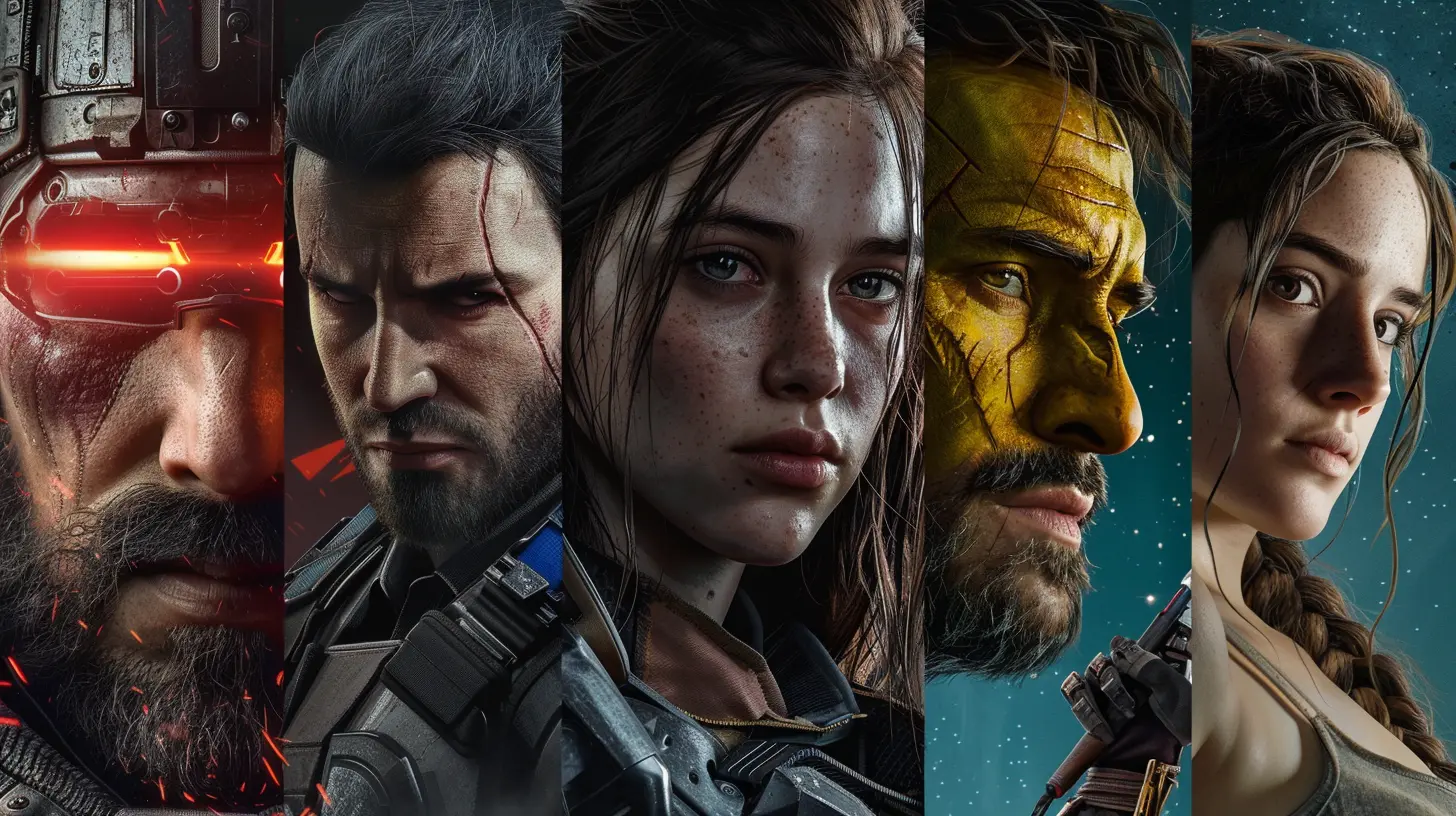
What Does “Breaking the Fourth Wall” Even Mean?
Before we dive into our pixelated roster of wall-breakers, let’s clarify what this term actually means. The “fourth wall” is an invisible barrier between the audience and the story. It’s like the screen you watch or the controller you hold.When characters “break” this wall, they step outside the world of the game and acknowledge you—the player. They talk to you, mess with you, or pull off stunts that shouldn't be possible in a “normal” game world.
Think of it like watching a movie, and suddenly the main character turns to the camera and talks to you. It's creepy, clever, and totally unforgettable when done right.
Why Breaking the Fourth Wall Works So Well in Games
Games are already interactive, right? But when that interaction goes a step further—when a character addresses you by name, reads your saved files, or messes with your interface—things get next-level immersive or disturbingly meta. It blurs the line between player and game, and that weird fusion? That’s where the magic happens.Now, let’s talk about the elite crew of characters who’ve mastered this art.
1. Deadpool – The King of Meta Mayhem
You can’t start a list like this without mentioning Deadpool. Even though he started as a comic book character, Deadpool made a loud, chaotic leap into video games—and brought his trademark fourth-wall-breaking antics along for the ride.In the 2013 video game Deadpool, the merc-with-a-mouth literally talks to the player, debates with his own inner voices, critiques the game's script, and even “calls” the game developers mid-game. He knows he’s in a game, and he’s got zero chill about it.
It’s silly. It’s self-aware. And it’s 100% Deadpool.
2. Psycho Mantis – Reading Minds Since the 90s
If you’re a fan of Metal Gear Solid, you already know where this is going.Psycho Mantis wasn’t just a boss fight—he was a total mind trip. This guy didn’t just fight you; he straight-up read your memory card. He’d comment on your save files (“You like Castlevania, don’t you?”). Then he’d make you think your TV broke by messing with your screen.
And just when you think you’ve figured the game out, you realize the only way to beat him is to literally unplug your controller and plug it into a different port. Genius? Absolutely. Traumatizing? A little bit, yeah.
3. Monika – The Sweetheart You Never Saw Coming
Doki Doki Literature Club! looks like your typical cutesy dating sim with pastel colors and flirty anime girls. But then it turns into a psychological horror, and Monika becomes the stuff of nightmares.Monika isn’t just another love interest. She’s aware. Fully aware. She knows she’s in a game—and that you’re playing it. Eventually, she deletes the other characters, confines you to a room with just her, and starts talking about your computer files. Chill? No. Memorable? Heck yes.
Her final monologue is basically a twisted love letter directly to you, the player. Creepy and iconic.
4. The Narrator – The Stanley Parable
If existential dread and dry British humor had a baby, it’d be The Stanley Parable.Throughout the game, the narrator tries to guide you through a story—but what happens when you don’t do what he says? That’s when the real fun begins.
The narrator constantly updates his dialogue based on your choices, praises you, mocks you, and even throws sarcastic tantrums. It’s like having a passive-aggressive roommate stuck in your head. And yes, he knows you’re playing.
The Stanley Parable isn't just about breaking the fourth wall. It’s about questioning whether the wall even exists in the first place.
5. GLaDOS – Sarcasm Meets Supercomputer
OK, so GLaDOS from Portal isn’t exactly a typical wall-breaker, but there’s something cheeky about how she talks to the player rather than just the character.She throws metaphors at you like they’re grenades, mocks your progress, lies to your face, and occasionally slips meta-references that make you feel like she’s watching—not just your character, but you.
Her tone is oddly personal, considering she’s a psychotic AI. And let’s not even mention “the cake is a lie.” That meme alone is proof GLaDOS knew she was messing with more than just pixels.
6. Max – Life is Strange
Breaking the fourth wall doesn’t always mean chaos and giggles. Sometimes, it’s used to deepen emotional impact. In Life is Strange, Max Caulfield can rewind time, and while the game doesn’t pull the usual fourth-wall gags, there’s a unique intimacy created between Max and the player.She often reflects on her decisions, looks at the camera, and questions reality. It's subtle, but effective. By the time the story hits its heartbreaking choices, you feel like Max is looking to you for answers. Not the game. You.
7. The Joker – Batman: Arkham Series
Trust The Joker to pull off some of the most disturbing wall-breaking moments.In Batman: Arkham Asylum, Joker hijacks the game's UI. Out of nowhere, the game “glitches,” reboots, and starts playing the opening scene in reverse—but with Joker in Batman's place.
It’s a brain-melting moment that breaks the wall in the middle of an intense story arc. Joker uses it for pure chaos, and it’s so perfectly in character that it’s almost poetic. Joker doesn’t play fair—and he sure doesn’t play by the rules of the game either.
8. Undertale’s Sans – Smiling Through the Matrix
Undertale is a masterclass in subverting expectations, and Sans is the ultimate troll wrapped in a hoodie.If you play nice, Sans is a lazy pun-loving skeleton. But go down the Genocide Route, and he turns into a boss who’s fully aware of your actions—even if you restart the game to hide your sins.
Sans remembers everything. Every reset, every kill. He talks to you like you’ve broken the universe, and he holds you accountable whether you like it or not. That kind of awareness turns him into more than just a character—he becomes your judge.
Why We Love Fourth Wall Breaks in Games
Let’s be honest—when a game breaks the fourth wall, it feels like a secret handshake between the developer and the player. It’s those “wait, did that just happen?” moments that stick with you long after you’ve shut the console down.It adds layers to storytelling, makes characters feel more alive, and sometimes… just makes you question your existence a little (looking at you, Monika).
Plus, it reminds us that games aren’t just about completing levels or racking up XP. They’re about experiences—uniquely unforgettable moments that couldn’t exist in any other medium.
Honorable Mentions
There are way too many characters to fit into just one list, but here are a few honorable mentions who also know how to smash that imaginary screen:- Conker from Conker’s Bad Fur Day: Constantly aware he's in a messed-up game world.
- Dead Cells’ Beheaded: Occasionally gestures and breaks immersion with hilarious expressions.
- Braid’s Protagonist: The final level flips everything on its head with time-reversed storytelling.
- EarthBound: With its trippy finale and references to the player, it was way ahead of its time.
Final Thoughts: When Games Talk Back
There’s something kind of magical (and a little unsettling) about a character who knows they’re fake—and decides to do something about it. Whether it’s hilarious, horrifying, or just plain wild, fourth wall breaks turn games into something more than just games. They become personal.So the next time a game character looks you in the eye and starts talking? Don’t freak out. Just enjoy the moment. After all, that’s what makes gaming such a beautifully weird and wonderfully immersive art form.
all images in this post were generated using AI tools
Category:
Best Game CharactersAuthor:

Luke Baker
Discussion
rate this article
1 comments
Soren McNaughton
This article does a great job highlighting characters that interact with players in unique ways. It adds a fun layer to the gaming experience when they acknowledge us directly.
August 9, 2026 at 2:55 PM